Projects
Robots that understand their surroundings, measure what is hidden, and interact with the physical world.
Lunar Rock Reconstruction
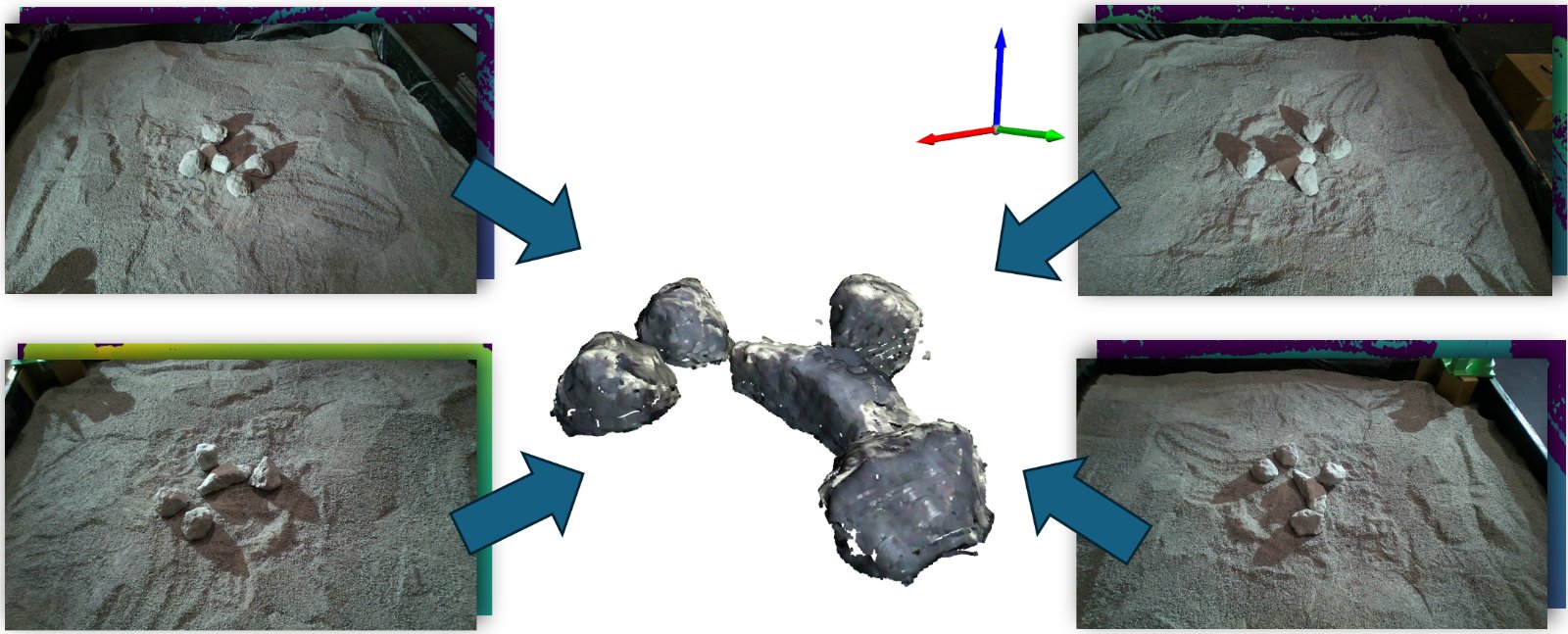
This pipeline turns registered RGB and inverse depth into one metric mesh for each visible rock. YOLO26x-seg supplies instance masks; each mask is eroded by three pixels and back-projected through the camera intrinsics into the shared Unreal world frame.
After ShadowCorr associates observations of the same rock, the merged cloud is downsampled and filtered. Hidden geometry is completed with a 2× covariance ellipsoid centered at the lower third along its local vertical axis, trimmed by the estimated ground boundary, and converted to a validated alpha-shape mesh.
ShadowCorr
A rock that is partly occluded can appear as several disconnected segments in different camera views. ShadowCorr projects each segment behind its observed surface into a shared voxel grid, learns embeddings from the resulting volumetric consensus, and assigns the original segments to physical rocks.
The Mask75 evaluation assigns every method over the same original segment support and reports end-to-end runtime for a consistent comparison.
| Method | Segment ARI | Point-wtd. ARI | Average purity | Runtime |
|---|---|---|---|---|
| ShadowCorr | 96.09% | 99.65% | 98.84% | 183.8 ms |
| PTv3-PointVote | 89.33% | 95.72% | 96.05% | 189.7 ms |
| Open3DIS-MatchedMasks | 71.20% | 89.32% | 89.77% | 197.8 ms |
Burial-Depth Estimation
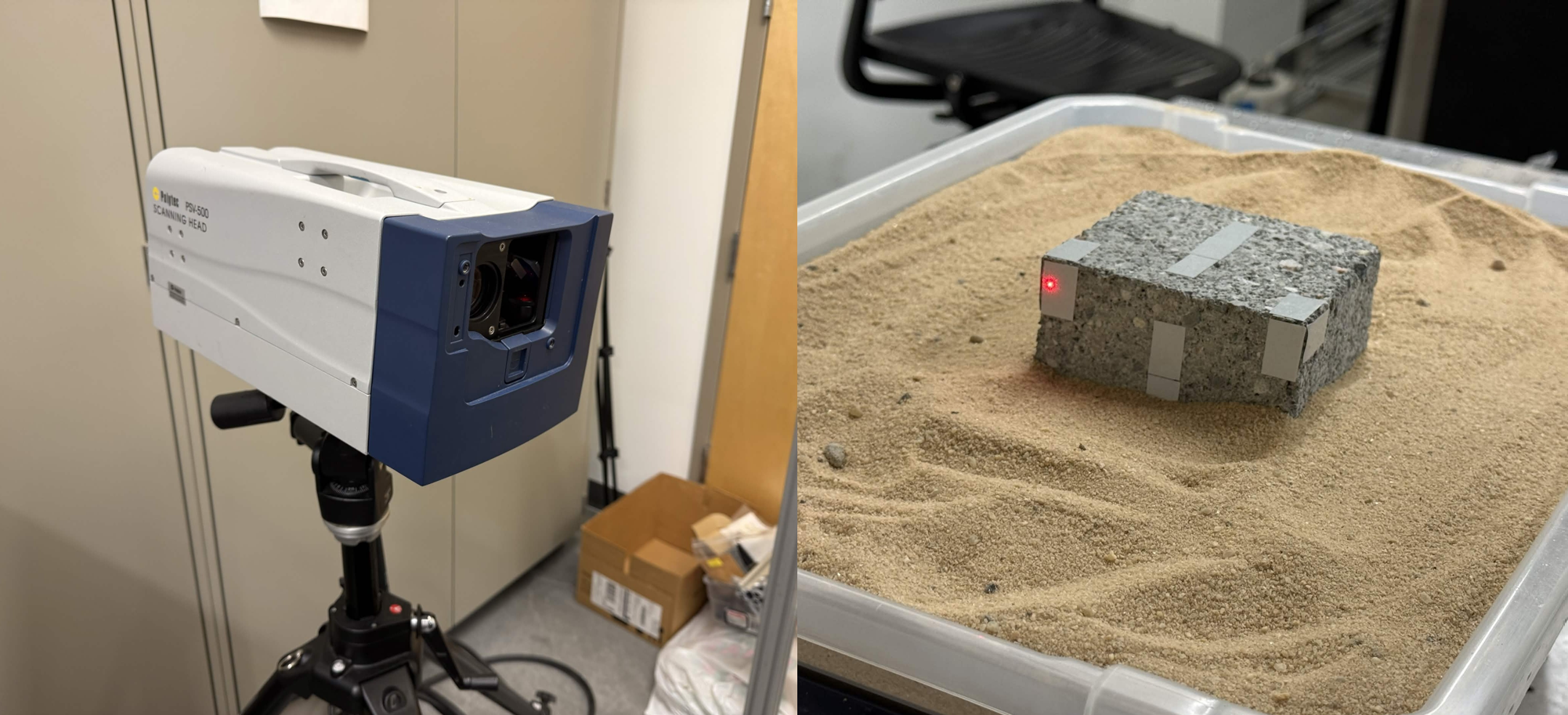
Vibration reveals buried geometry beyond the exposed surface. This first-of-its-kind method excites a partially embedded rock with an instrumented hammer and measures its response with a scanning laser Doppler vibrometer.
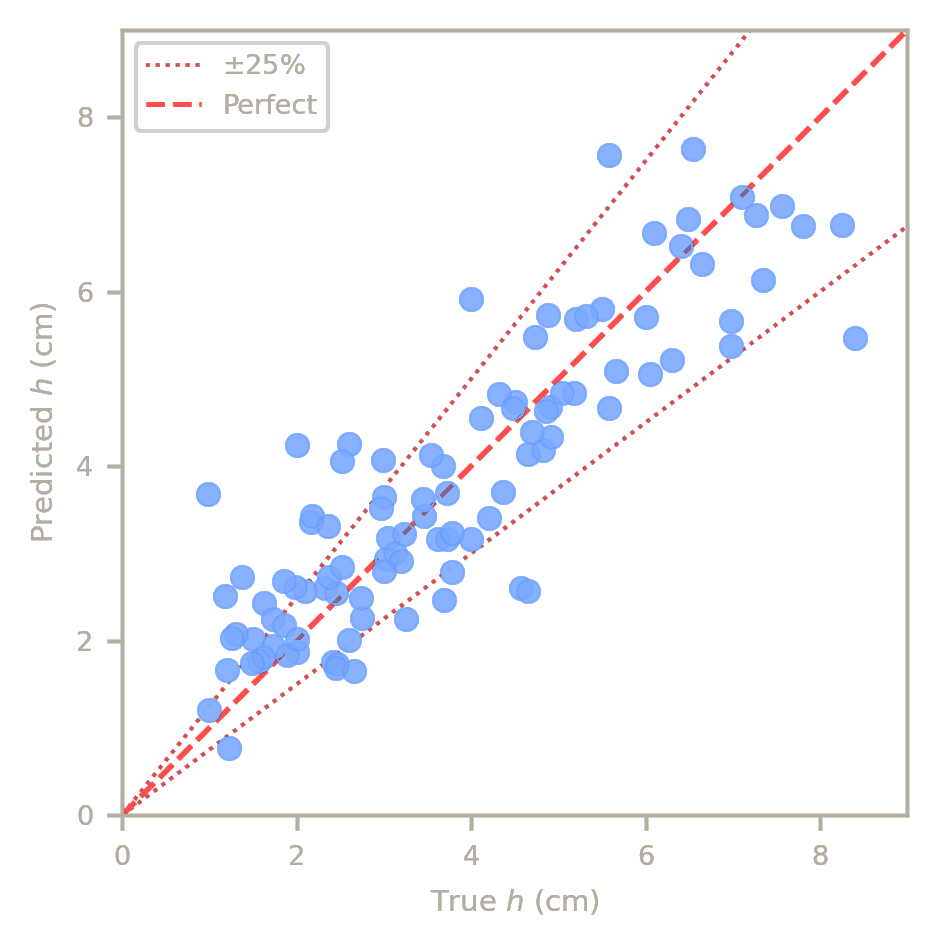
Measurements from two orthogonal strike directions become eleven interpretable geometry and vibration features: exposed height, cross-section width, resonance frequency, peak mobility, damping ratio, and spatial vibration-decay slope encoded as directional means and differences. A compact multilayer perceptron predicts absolute burial depth without measured rock mass, assumed density, or soil parameters.
In-Field Train-Track Repair
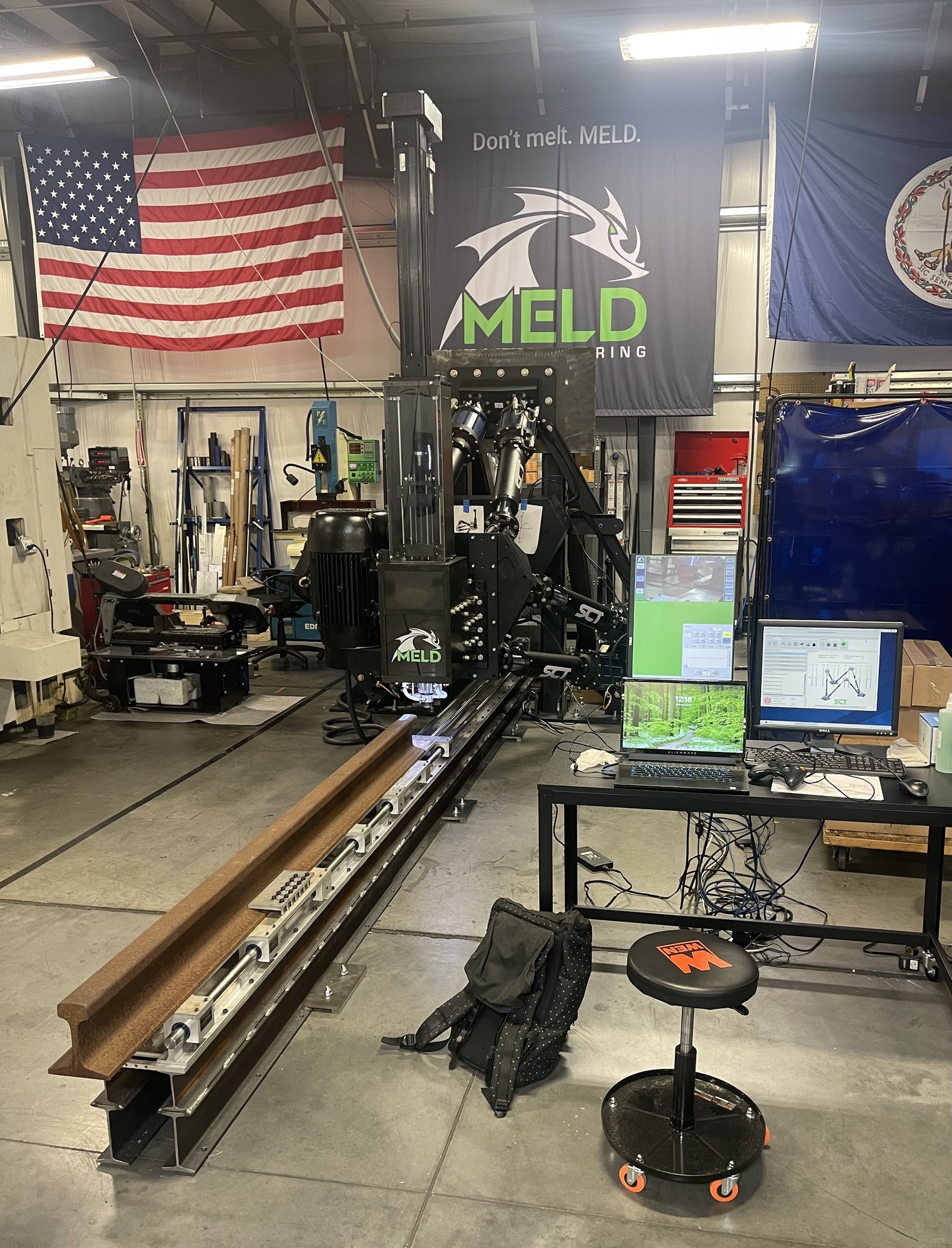
Developed with the FASER Lab and MELD Manufacturing, this full-scale system combines an Additive Friction Stir Deposition print head, a six-degree-of-freedom Stewart platform, and a servo-driven rail mover to repair worn rail in place.
My work covered the 8-ft rail-feeding mechanism and support frame, structural and finite-element analysis under process loads, workspace and reachability analysis for the hexapod, and coordinated control software for the feeder, platform, and print head.